
Key Takeaways
- Regular sunglasses lack the contrast and stability needed for a full round of golf.
- Lens tints like rose, copper, and amber help you track the ball against grass and sky.
- Polarized lenses can reduce depth perception on greens, making non-polarized a smarter pick for golf.
- Wrap-around frames with grippy materials stay put through your entire swing.
- An optometrist in Victoria, BC can help you find prescription golf lenses tailored to your vision needs.
Improve Your Game with the Right Lenses
You’ve spent time on your grip, your stance, and your swing. But if you’re squinting into the sun on the back nine or losing track of a ball mid-flight, your sunglasses might be working against you. Most people don’t realize how much their eyewear affects their game until they try a pair built for the course.
At Driftwood Optometry, we work with active patients to find eyewear that fits their lifestyle, including time spent on the fairway. Our sunglasses selection includes brands with 100% UV protection and personalized fittings to help you find the right pair.
Golf glasses and regular sunglasses are not the same thing, and the difference comes down to lens tint, frame design, and how well they hold up across hours of sun exposure, movement, and changing light conditions.
Why Your Regular Sunglasses Fall Short on the Course
Your everyday sunglasses were made for walks, drives, and afternoons on a patio. The tints are general-purpose, the frames sit flat, and the fit works for casual wear. Golf is a different ask entirely.
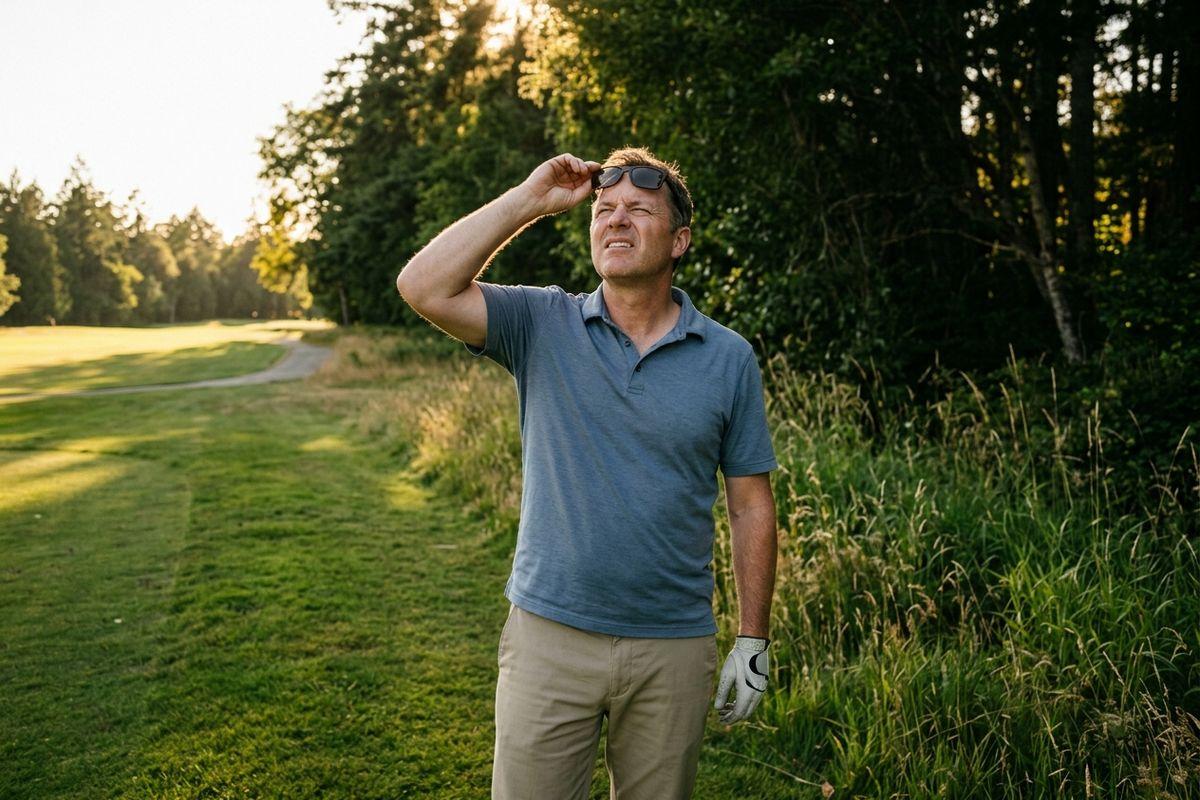
When you swing, your head rotates and your body shifts. Standard frames that fit fine when you’re standing still can slide down your nose or shift just enough to throw off your eye line. That split-second movement matters. On top of this, most everyday lenses aren’t designed to pick out a white ball against a bright sky or a fairway in late-afternoon shadows. The contrast just isn’t there.
Lens Tint and Colour on the Golf Course
Tints That Work for Golf
Lens colour does more than filter light. It also influences what your eyes can distinguish in different conditions. For golf, that distinction matters every time you follow a ball through the air or read a green.
- Rose, copper, and amber tints sharpen contrast against green grass and blue sky.
- These tints help your eyes separate the ball from its background more easily.
- Brown tints offer a warmer view that works well in bright, midday conditions.
Polarized vs. Non-Polarized for Golf
Polarized lenses are popular for a good reason. They reduce glare off water, glass, and pavement. On a golf course, though, they can actually work against you.
- Polarized lenses can flatten depth perception, making it harder to judge distances on undulating greens.
- Non-polarized lenses preserve distance judgement, which helps with putting and approach shots.
- Photochromic lenses adjust their tint as the light changes, so you stay comfortable from the first hole to the last.
UV Protection and Eye Comfort Over a Full Round
A round of golf means three to five hours outdoors, often without much shade. That’s a lot of direct sun exposure for your eyes, and it adds up over a season.
Look for lenses that offer 100% UVA and UVB protection. This isn’t just about comfort while you play. Repeated UV exposure over time is associated with changes in eye health, including earlier development of cataracts.
Frame Fit and Design Built for Your Swing
Wrap-Around Coverage
A wrap-around frame does two things a flat frame can’t. It blocks glare and wind coming in from the sides, and it holds steady through the full rotation of your swing. If your glasses shift even slightly as you hit, your visual reference shifts with them.
Lightweight and Grippy Materials
By the middle of your round, you’re likely sweating. A frame that felt snug on the first tee can start sliding once the rubber nose pads lose their grip. Golf-specific frames use materials designed to hold firm as you warm up.
- Rubber nose pads grip better against damp skin than smooth plastic.
- Lightweight frames reduce pressure on your nose and temples over a long round.
- A secure fit means fewer distractions and more focus on your game.
How to Find the Right Pair for Your Game and Vision
Shopping for golf glasses isn’t quite like picking up a pair off a rack. Fit, lens choice, and your own vision needs all play a role. A few things to keep in mind when you’re ready to look:
- Try frames on with your hat or visor to check how they fit together. Some frames sit too high or low depending on the brim.
- Prescription golf lenses are available, so you don’t have to choose between clear vision and proper sun protection.
- An optometrist in Victoria, BC can assess your vision and help you choose a lens that fits both your prescription and your playing conditions.
The right pair of golf glasses won’t fix your short game, but they can make the experience more comfortable and give your eyes the support they need across hours of sun and movement.
Our team at Driftwood Optometry takes the time to understand how you use your eyes, both on the course and off, which is why we’re equipped to guide you toward eyewear frames and lens options that fit your lifestyle. Reach out to request an appointment and find a pair worth playing in.